
RV AC Repair Austin – Stay Cool in the Texas Heat
When your RV's air conditioner stops working in Texas heat, the discomfort sets in fast. Boss Bull provides mobile RV air conditioner repair across Austin and Central Texas — mobile RV AC repair Austin, TX included. Whether you're at home, at an RV park, or at a campsite, we come to you fully equipped to restore cooling the same day in most cases.
Every repair, no questions asked.
Better Business Bureau accredited.
$500–$25,000. 0–35.9% APR based on creditworthiness.
Austin and Central Texas.
Overview
Texas summers push rooftop AC units hard. With temperatures regularly climbing past 90 degrees, a properly functioning AC unit is not optional for RV owners traveling or camping in Central Texas. Heat-related illness is a real risk when an RV loses cooling during peak summer conditions.
We service all major rooftop AC brands including Dometic, Coleman, and Advent. Our mobile RV air conditioner repair covers Austin, Round Rock, Georgetown, Cedar Park, Leander, Marble Falls, San Marcos, and the surrounding Central Texas communities — same-day service is often available.
When an AC unit is beyond repair or no longer keeping up with demand, we offer replacement as well. Our technicians review the appropriate BTU and model for the RV, handle the installation on site, remove the old unit, and walk the owner through maintenance to help the new unit last.
A seasonal cleaning and service check goes a long way toward preventing breakdowns. We service ceiling assemblies, check airflow separation, and review rooftop unit condition so your system is ready before peak summer arrives.
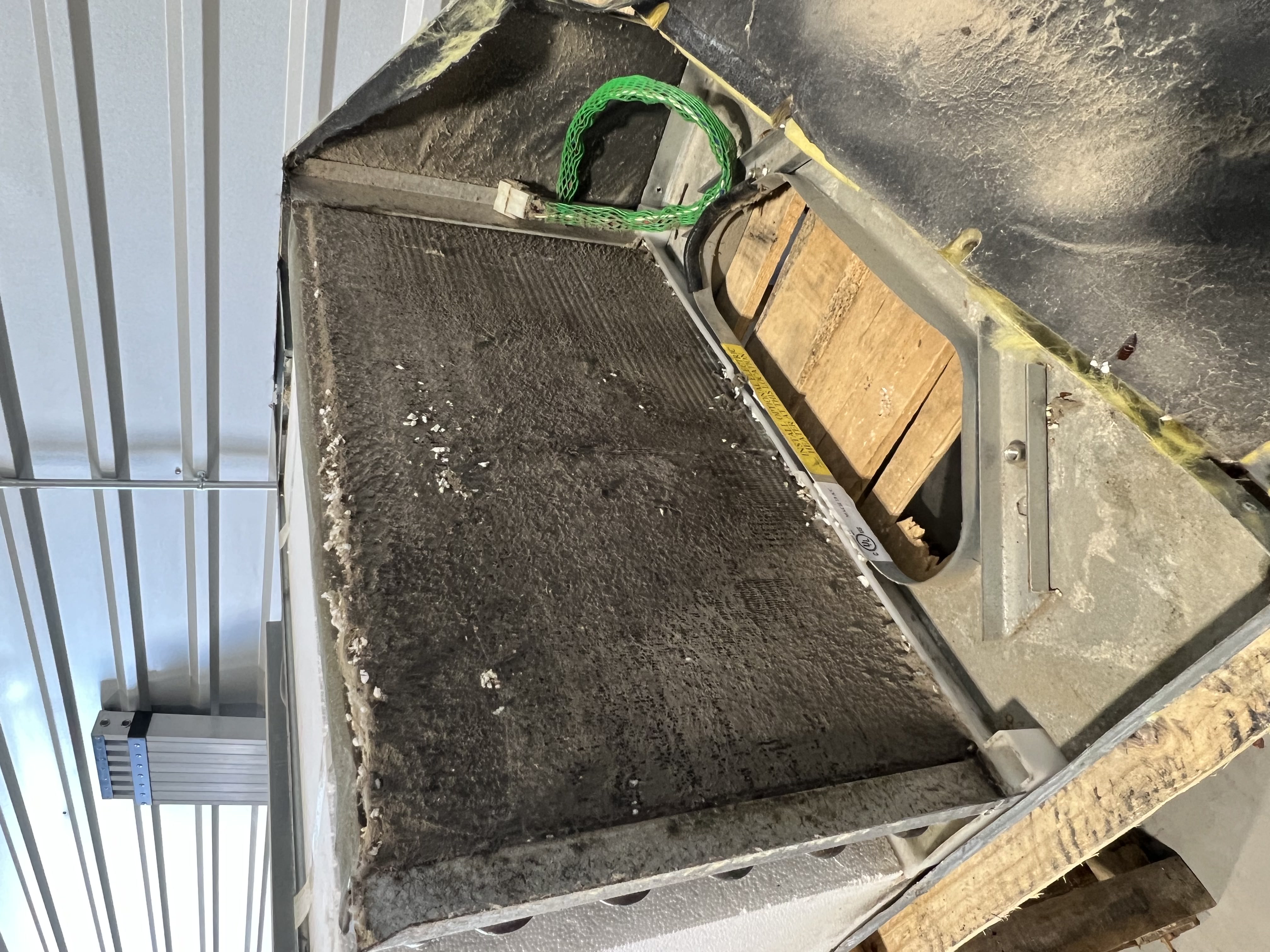
Condenser condition documented after shroud removal during an AC service visit. Debris across the coil face restricts airflow and reduces cooling capacity.
The unit was brought down so the full condenser coil face could be documented before any cleaning or repair work began.
Common Problems We Fix
- AC blowing warm air
- Weak airflow from vents
- AC won't turn on
- Strange noises or smells
- Frequent cycling on and off
- Water leaks inside the RV
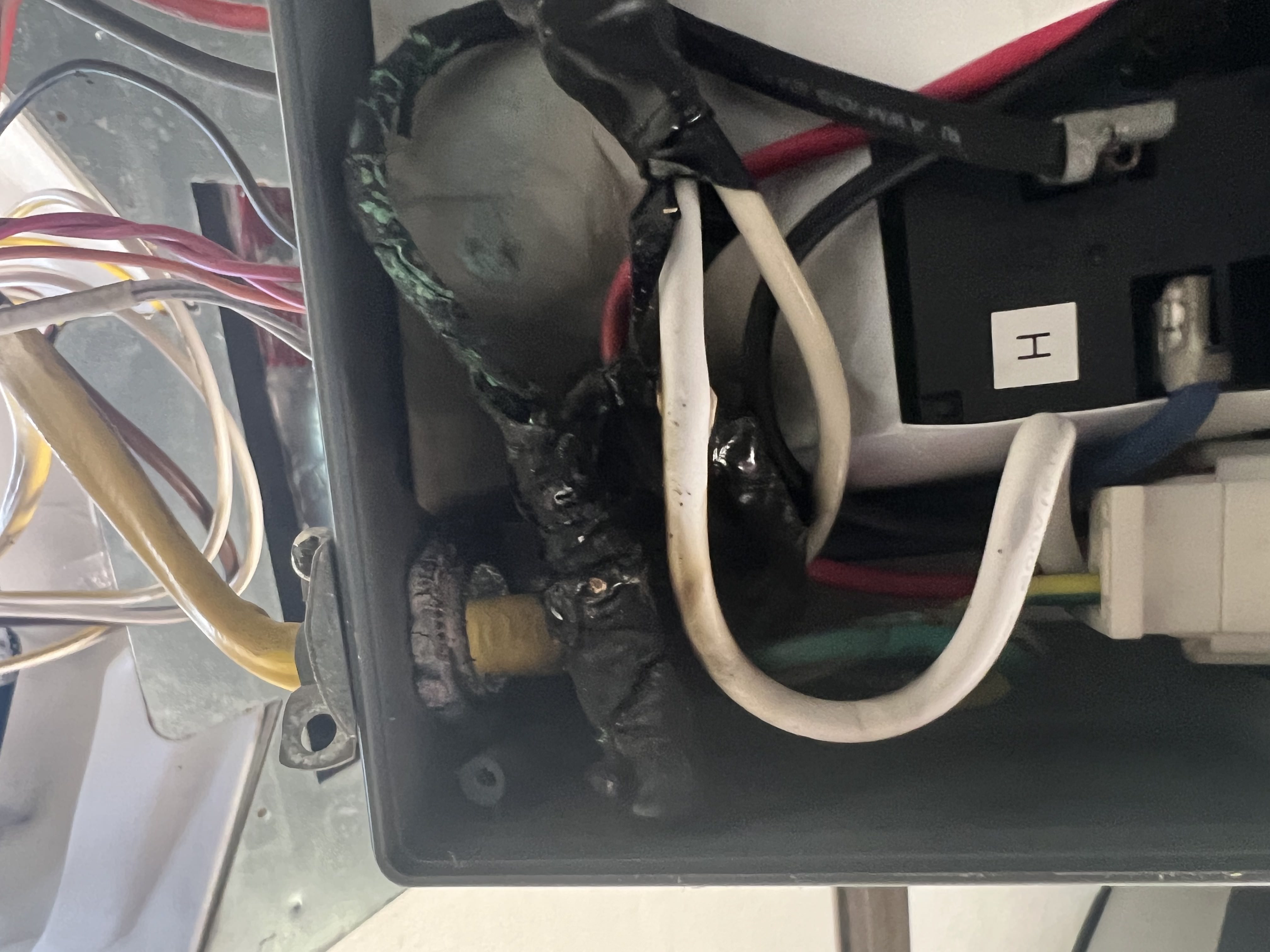
Control box wiring condition documented during an AC service call. Severe heat damage to the wiring and component housing is a safety concern that requires immediate repair.
The control box cover was removed to reveal extensive heat damage to the wiring, capacitor, and surrounding components. This level of failure requires full component replacement rather than a field repair.
Common Findings During RV Air Conditioner Repair Service Calls
Most RV AC complaints start with poor cooling, weak airflow, or unusual noise. During service visits, we frequently find that the visible symptom connects to condenser condition, start capacitor failure, ceiling assembly airflow, or age-related component wear — not always an obvious single failure.
- Condenser coils fouled across the entire face with debris and compacted insulation — airflow reduced to the point the compressor cannot reject heat effectively
- Start capacitor at end of life — the compressor draws full amperage, hums briefly, and either trips the breaker or shuts down without ever starting the refrigeration cycle
- Fan motor operational but compressor locked out — indicating a failed run capacitor or start relay rather than a compressor replacement situation
- Burnt or heat-damaged wiring inside the control box caused by a prior overcurrent event or water intrusion reaching live terminals
- Air separator missing or collapsed inside the ceiling assembly — allowing supply and return air to mix, which eliminates cooling even when the rooftop unit is functioning correctly
- Rooftop unit base gasket dried and cracked — allowing warm humid air to bypass the ceiling seal and in some cases allowing water to track down into the ceiling cavity
- Units past their practical service life where the cost of continued repair outweighs a replacement on the same visit
Technician Observations
What Owners Commonly Report
Presenting complaints we hear most often on these service calls.
- RV AC runs but does not cool well
- Weak airflow from ceiling vents
- AC short cycling or shutting off unexpectedly
- Water dripping inside the RV from the ceiling assembly
- Loud vibration, humming, or grinding noise during operation
What We Frequently Find
Actual conditions we document when we arrive on site.
- Condenser coils packed with debris, cottonwood, and insulation across the full coil face — restricting heat rejection before any electrical fault is present
- Start capacitors that have weakened or failed — the most common cause of a compressor that hums, draws power, and trips the breaker without starting
- Rooftop shrouds cracked or shattered by hail, UV stress fractures, or physical impact from a low-clearance entry — exposing the motor, coils, and fan blade to the elements
- Ceiling assembly airflow problems — return air restricted at the ceiling gasket or supply air ducting collapsed inside the ceiling cavity, starving the unit of the airflow it needs
- Burnt or melted wiring inside the control box — caused by sustained overcurrent events, water intrusion reaching live terminals, or rodent activity at the rooftop deck level
Service Recommendations
What we typically advise based on our findings.
- Document the symptoms and operating conditions at the time of the service call
- Review whether the unit is repairable or whether replacement is the more practical path given age and parts availability
- Check related electrical supply and thermostat wiring during the service visit
- Photograph control box, capacitor, and coil condition for insurance documentation when hail or storm damage is present
- Confirm whether warranty or extended service contract documentation may apply before repair work begins
Why RV Owners Choose Mobile RV Service
- AC is restored at your location — no need to move the RV when the unit is not working in Texas heat
- Service at RV parks, campgrounds, storage facilities, and residences across Central Texas
- Common capacitors, filters, and condenser components stocked on the service van — many AC repairs completed same day
- Central Texas summer heat makes fast AC service a priority — Boss Bull comes to you
- Service across Central Texas including Austin, Georgetown, Round Rock, Cedar Park, Kyle, Buda, and surrounding areas
- Financing available through Wisetack for AC replacement and HVAC system work
Brands & Systems We Commonly Service
- Dometic rooftop and ducted AC units
- Coleman-Mach rooftop AC units
- Furrion rooftop AC units
- Advent Air rooftop AC units
- Start capacitors and run capacitors
- Fan motors and blower assemblies
- Rooftop shrouds and housings
- Zone controllers and thermostats
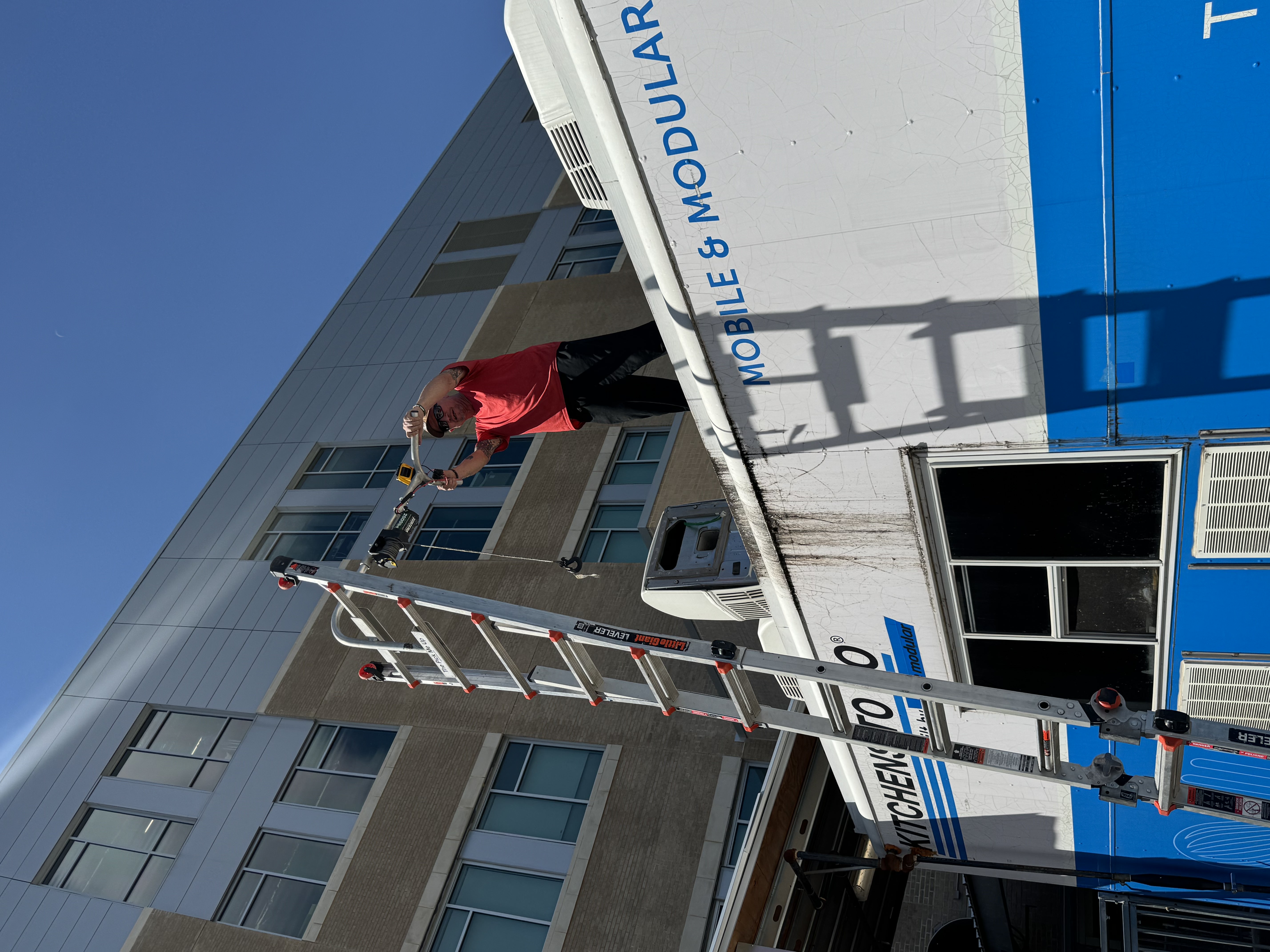
AC replacement in progress using Boss Bull's on-site hoist system. The technician manages the unit from the roof during the swap — no shop drop-off required.
A hoist was used to safely lower the old unit from the roof before the replacement was installed. This setup allows full AC replacements to be completed on site.
More From This Service
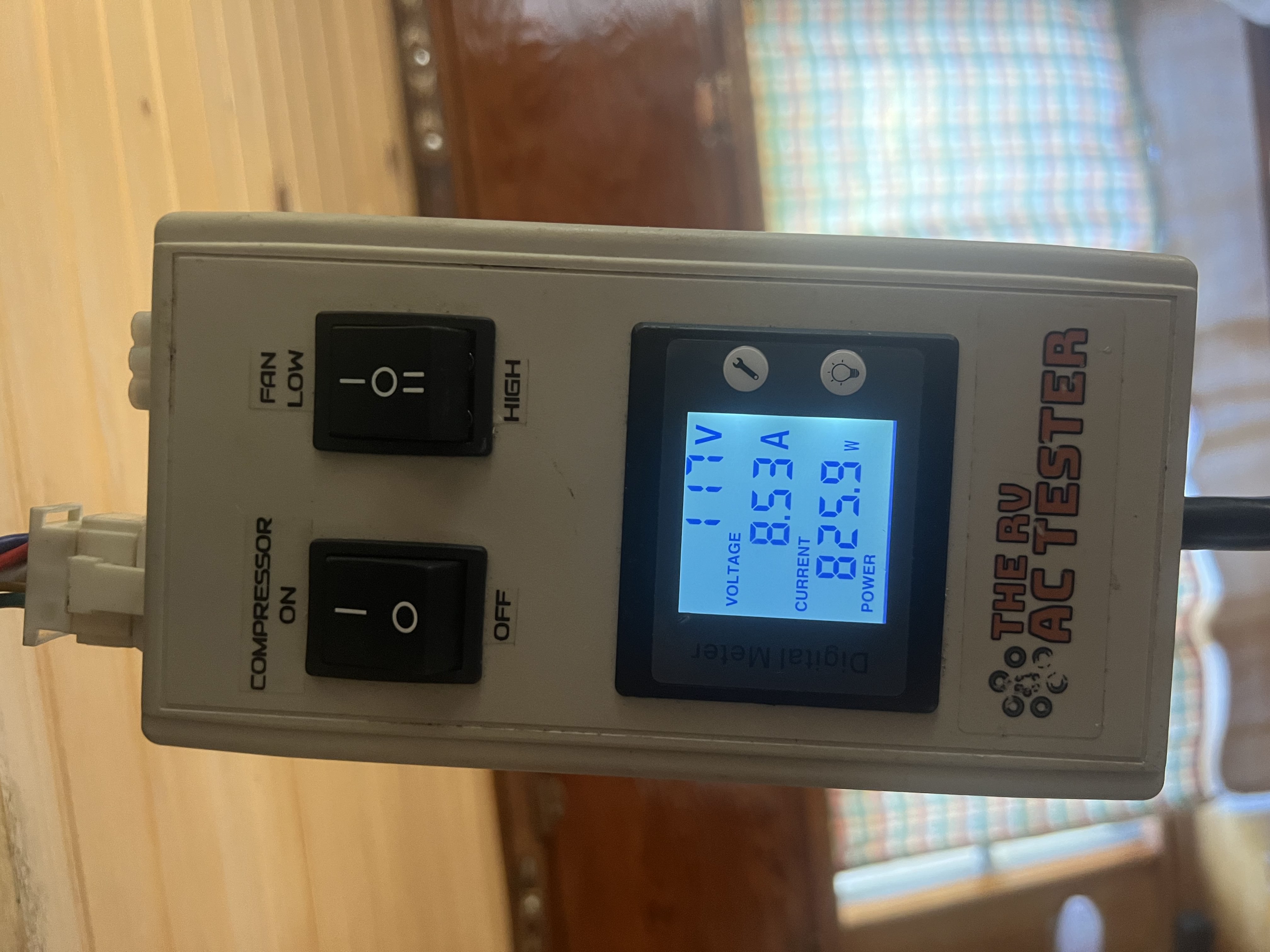
Live AC tester readings captured during a service call with the compressor running. Voltage, current, and wattage are recorded to evaluate actual operating performance.
Readings were taken with the compressor on and the fan on low. A 117V / 8.53A draw at 825.9W indicates the compressor is actively running, which helps confirm whether the refrigeration circuit is engaging properly.
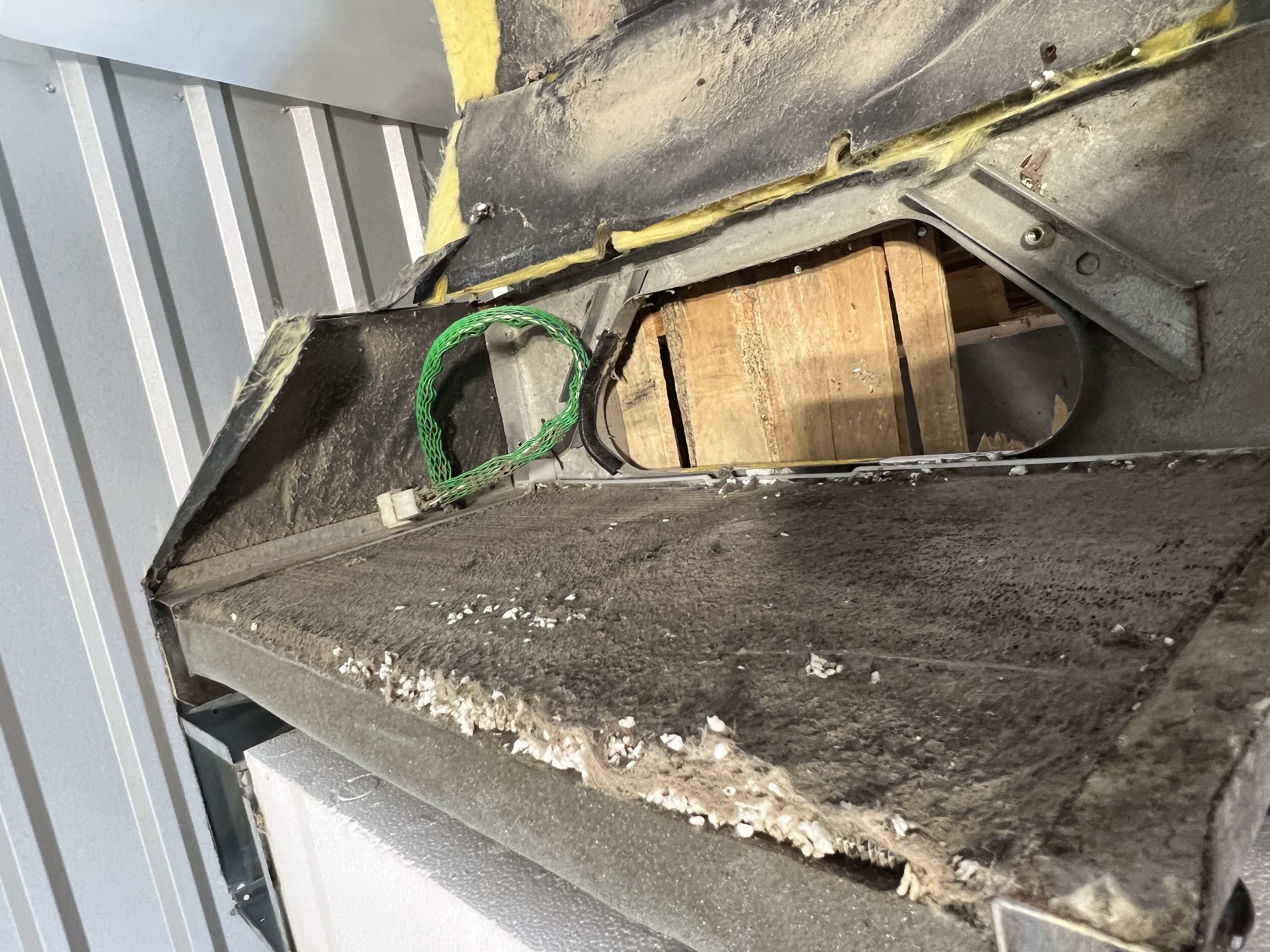
Condenser fin face condition documented up close after the shroud was removed. Debris compacted between the fins at this density prevents effective heat rejection and forces the compressor to work harder to maintain the set temperature.
The close-up documents the same coil shown in the overview but at a level of detail that makes the debris packing and fin condition clearly visible. At this stage, cleaning the coil face is required — the debris is not going to shed on its own.
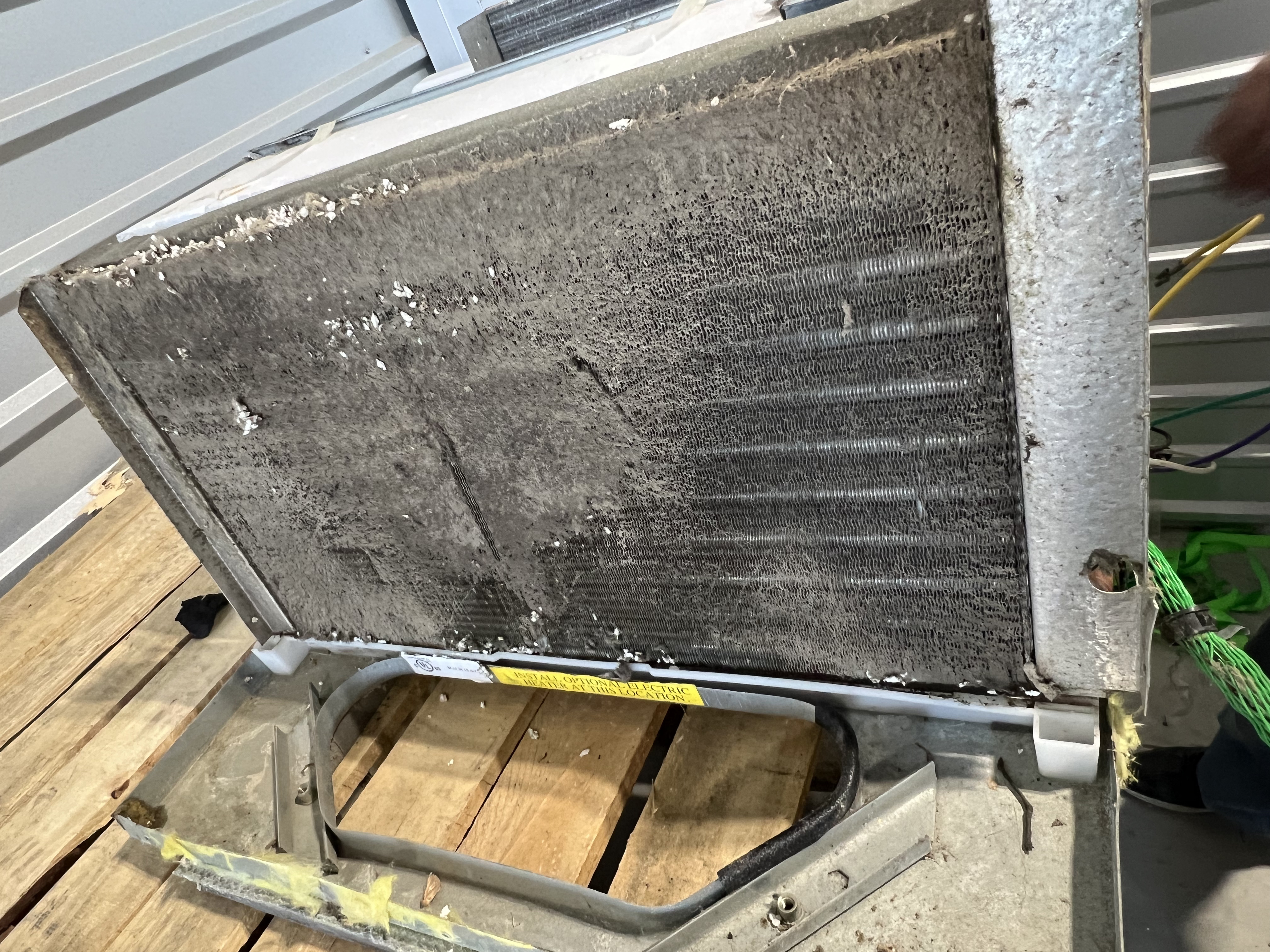
Condenser panel propped open to document the full coil face condition. Uniform debris packing across every fin row confirms significant airflow restriction across the entire coil.
The panel was opened on the shop floor to allow the full coil face to be documented before cleaning began. The debris extended uniformly across every visible fin row with no clean sections remaining.
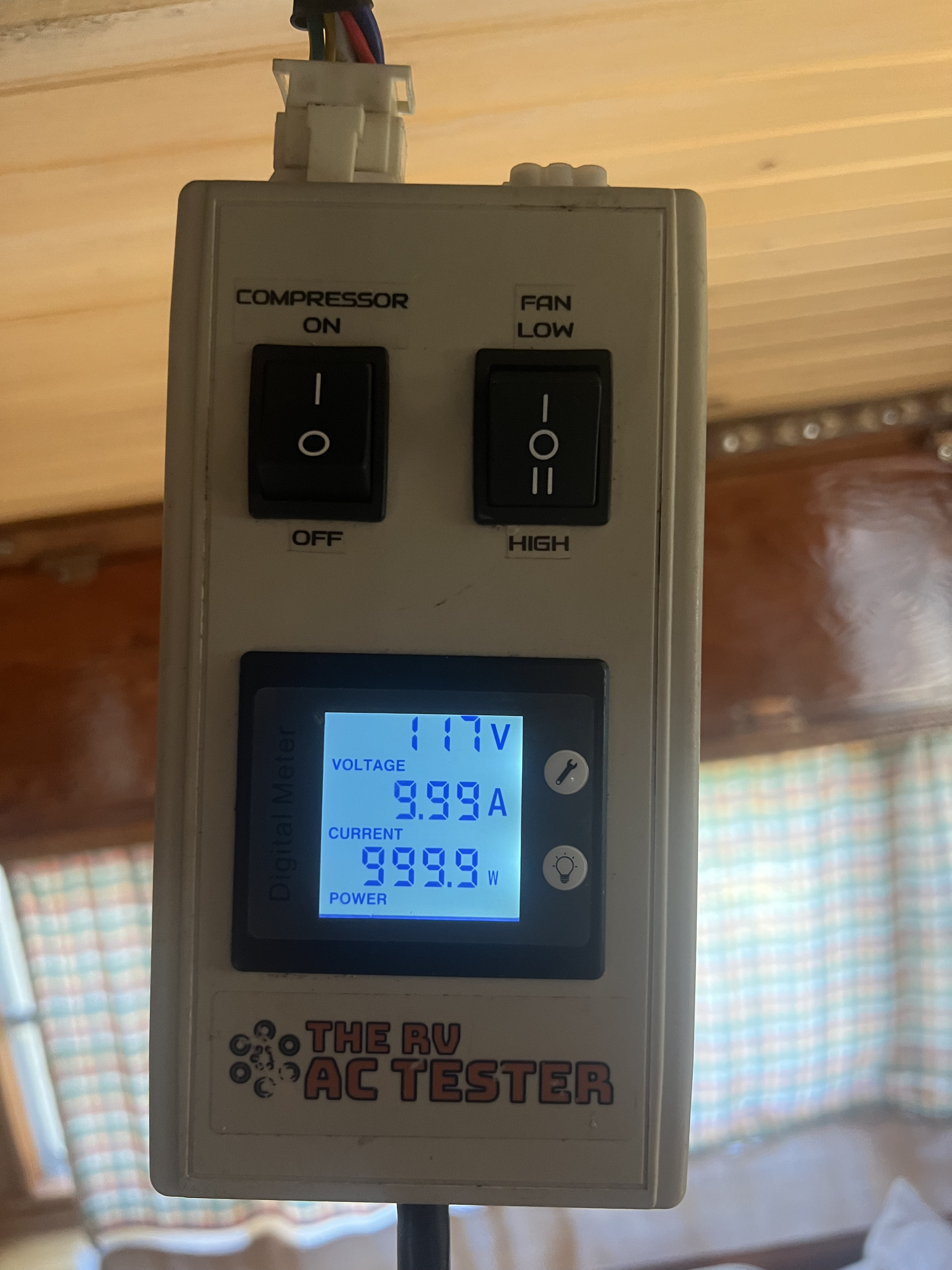
Live AC tester readings with the compressor on and fan on high. Voltage, current, and wattage at peak load are recorded to evaluate maximum operating draw.
Readings were taken with the compressor on and the fan on high. The 999.9W reading is at the top of the tester's display range, indicating the compressor is drawing near-maximum amperage — useful context when evaluating whether a circuit or shore power supply is adequate.
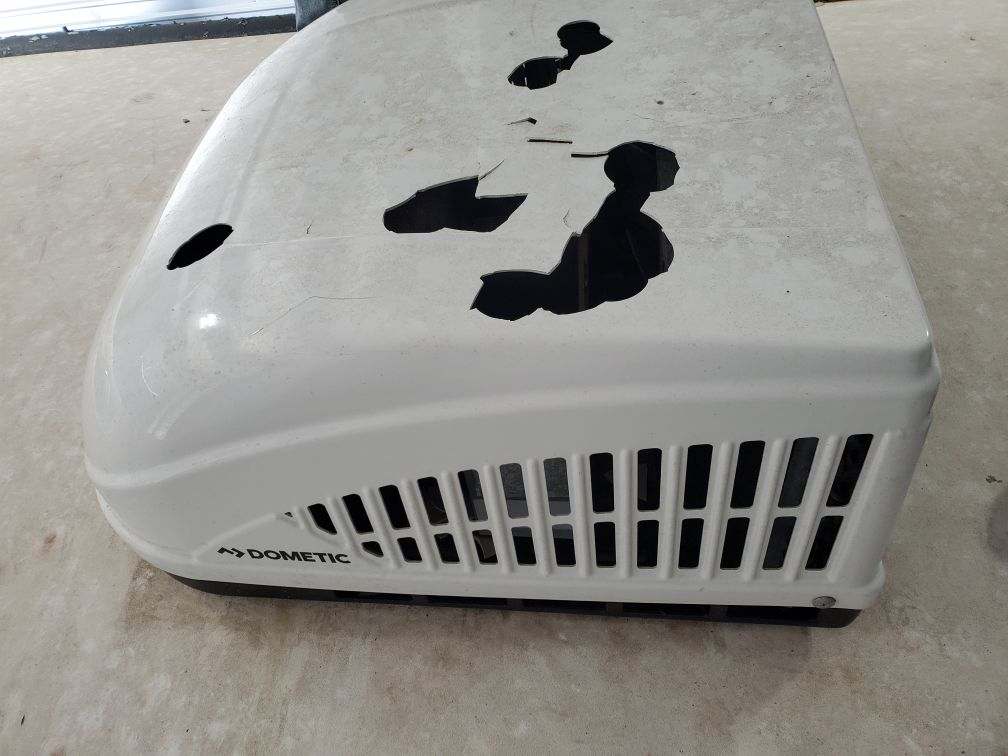
Dometic AC shroud documented after removal following a hail event. Multiple impact holes with jagged broken edges across the top panel make this shroud unrepairable — full replacement is required before the unit can return to service.
The shroud was brought down and placed on the shop floor for full documentation. Each breach point was photographed to support the claim package. The Dometic unit beneath was separately evaluated for condenser fin and coil damage before the damage assessment was finalized.
Related Services
Brands We Service
Service Areas
Frequently Asked Questions
What Our Customers Say
“Our camper AC went out and we called Rich on a Saturday, thinking no way we were going to get someone out on the weekend. But Rich came out that afternoon, took a look at the unit and came up with a solution.”
“He went into great detail telling me what was wrong (even showed me) and what would need to be done. He is very responsive, respectful and efficient!”
“They hurried out and worked with the warranty company and replaced my unit quickly. The second unit failed a couple of days ago. I called them, they came out and same service as first experience.”
Ready to get your RV back in service?
Schedule mobile RV repair across Central Texas, or call and talk to a tech now.