Expert RV Electrical Repair Services in Austin, TX
Most RV electrical problems arrive as a symptom with no obvious source: batteries that will not hold a charge after a full day on shore power, a breaker that trips every time the microwave runs, lights that flicker while driving but work fine at the campsite. Boss Bull Mobile RV Services traces those symptoms to their cause across Austin and Central Texas, working through the 12V and 120V systems on site at your location.
Every repair, no questions asked.
Better Business Bureau accredited.
$500–$25,000. 0–35.9% APR based on creditworthiness.
Austin and Central Texas.
Overview
RV electrical systems run on two separate circuits that depend on each other. The 120-volt AC side powers the air conditioner, microwave, and AC outlets when connected to shore power or a generator. The 12-volt DC side draws from the house battery bank and runs lights, the water pump, slide-out controls, and appliance control boards. A failure in the charging path — the converter that converts AC shore power to DC — affects both sides. Batteries that are not being charged drain the 12V side and eventually leave the RV with no working circuits at all.
The most common electrical calls we respond to fall into four categories: charging failures (batteries not responding to shore power or solar), distribution problems (GFCI trips, dead outlet runs, breakers that will not hold), transfer switch failures (power lost when switching from shore power to generator or back), and connection failures (loose or corroded terminals that produce intermittent or heat-related faults). We carry common converter components, fusing hardware, and connection materials on the service van so most electrical issues can be resolved the same day.
When the finding points toward a system upgrade — a converter that has failed and is worth replacing with a more capable unit, or a battery bank that has reached end of service life — we discuss the options with the owner before any work begins. Upgrade work is also available for solar charge controllers, inverter-chargers, and lithium battery systems.
Common Problems We Fix
- Malfunctioning generator
- Faulty outlets or wiring shorts
- Damaged converter or inverter
- Tripping or malfunctioning circuit breakers
- Underperforming solar charging
- Weak or failing house batteries
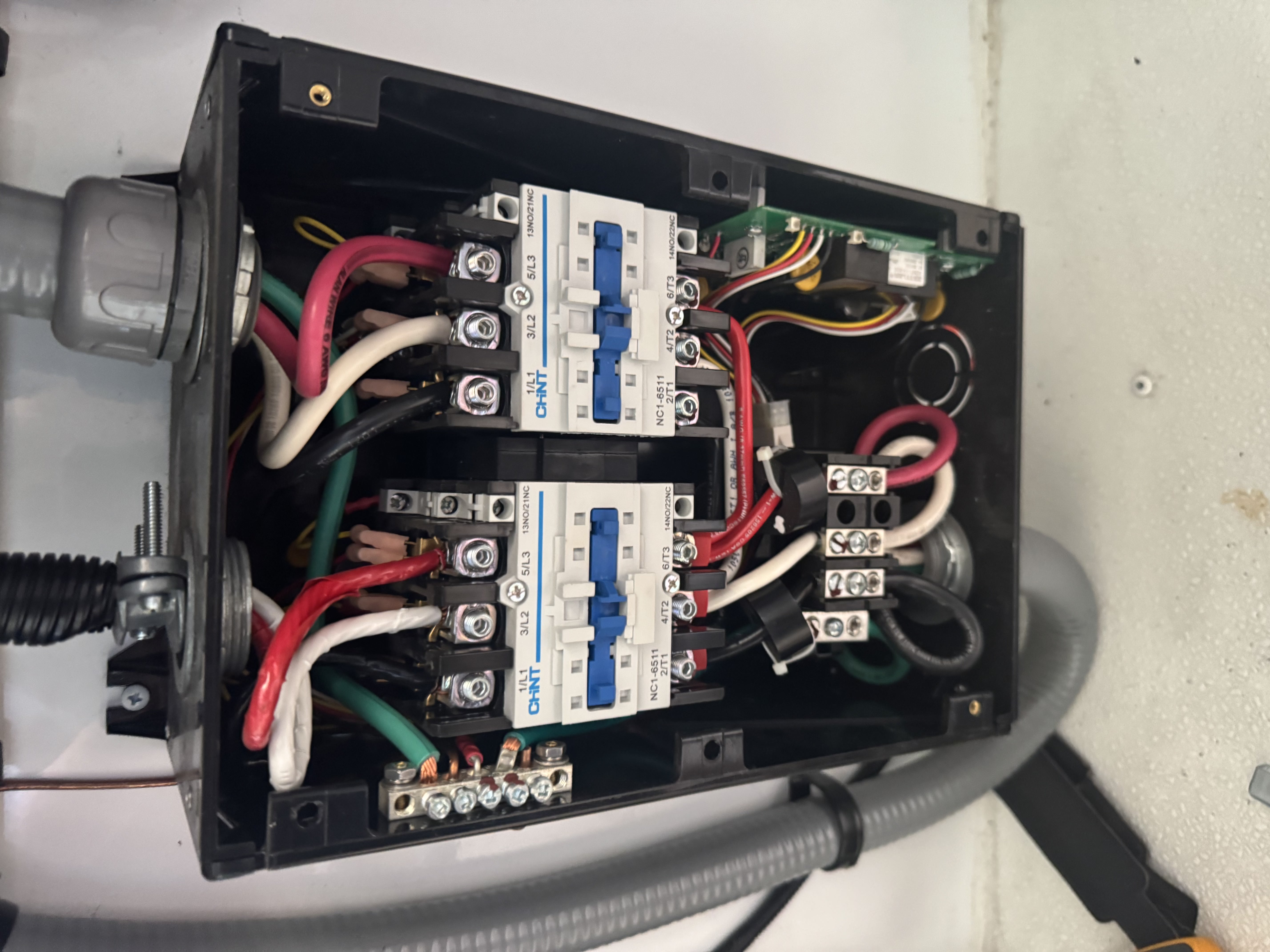
Transfer switch and dual-contactor assembly documented during a service visit. Wiring, connection quality, contactor condition, and the control board were all reviewed as part of the electrical diagnostic.
The enclosure was opened to document the transfer switch assembly. Both CHNT NC1-6511 contactors, the terminal bus, multi-color wiring, and the control board were photographed in the as-found condition before any work began.
Common Findings During RV Electrical Repair Service Calls
Most RV electrical calls start with one symptom — an outlet that does not work, batteries that will not hold a charge, or a breaker that trips repeatedly. What the technician finds behind the panel or under the chassis cover is usually a combination of connection condition, component age, and in some cases a previous repair that addressed the symptom but not the underlying cause.
- Battery terminal corrosion that has reduced charging current below the level needed to maintain or restore the battery bank — visible as gray-white sulfate buildup on the terminal posts and cable lugs
- Converter output terminal lugs that have backed off their torque — the converter is running but not delivering current to the batteries because the connection is loose
- Shore power inlet contacts that are burned or pitted from arcing — the plug does not seat fully and the contact surface has degraded, causing voltage drop under load
- Transfer switch contactors with delayed or failed engagement — the switch tests functional at no load but fails to transfer cleanly under the load of the air conditioner or microwave
- Fuse block spade terminals with corrosion or spread contacts — creates intermittent 12V circuit failures that are difficult to reproduce without the specific load that causes the terminal to lose contact
- Wiring at the battery disconnect switch that has developed heat damage from a high-resistance connection — the switch functions but the terminal has discolored insulation indicating it has been running hot
- Previous repair splices made with non-marine-grade tape or wire nuts — the splice has failed from moisture or vibration and intermittent faults have followed
Technician Observations
What Owners Commonly Report
Presenting complaints we hear most often on these service calls.
- Outlets not working — one area of the RV has no power while others function normally
- Batteries not charging despite being plugged into shore power all day
- A breaker trips every time a specific appliance is turned on
- Lights flickering or cutting out while driving or during use at a campsite
- Shore power plug feels warm or the inlet has a burning smell
- Appliances worked last trip but do not respond now
What We Frequently Find
Actual conditions we document when we arrive on site.
- Battery terminals coated with sulfate buildup — the corrosion creates enough resistance that the converter cannot deliver full charging current, and the batteries stay chronically undercharged even when shore power is connected
- Converter output terminals that have worked loose at the lugs — the converter reads as functioning but charging current is not reaching the battery bank, so batteries continue to drain
- Shore power inlet contacts burned or pitted from repeated connection without fully seating the plug — the inlet passes enough current for some appliances but drops voltage under load, which trips breakers intermittently
- Automatic transfer switch contactors that are slow to engage — produces a delay when switching between shore power and generator that is long enough to reset converter displays and trigger AC breaker trips
- GFCI outlets in the bath that have tripped without the owner realizing it, cutting power to multiple downstream outlets in the kitchen and exterior — the reset button is not always obviously visible
- 12V fuse block connections with corrosion or loose spade terminals — produces flickering lights or intermittent component failures that are difficult to reproduce on demand
Service Recommendations
What we typically advise based on our findings.
- Clean battery terminals and check torque at the converter output lugs before replacing components — a significant number of charging complaints resolve at the connection, not the converter
- Document which circuits are affected and whether the problem is consistent or intermittent — intermittent problems are often load-dependent and easier to trace at the RV's location than at a shop
- Address shore power inlet damage promptly — a pitted or burned contact point creates heat under load and is a fire risk in a confined electrical enclosure
- Use RV-rated replacement components — residential breakers and fuse hardware are not rated for the vibration environment of a traveled RV
- Provide documentation of findings and completed work for warranty or insurance review when applicable
Why RV Owners Choose Mobile RV Service
- Reliable power restored at your location — outlets, charging systems, and 12V circuits addressed on site without a shop drop-off
- Common breakers, fuses, connectors, and converter components stocked on the service van
- Safety-related electrical concerns — burned inlets, arcing connections, overheating terminals — addressed promptly
- Service at RV parks, campgrounds, storage facilities, and residences across Central Texas
- Service across Central Texas including Austin, Georgetown, Round Rock, Cedar Park, Kyle, Buda, and surrounding areas
- Financing available through Wisetack for converter, inverter, solar, and battery system upgrades
Electrical Systems We Commonly Service
- 12V DC house circuit: lights, water pump, slide controls, and distribution fusing
- 120V AC circuit: shore power inlet, GFCI outlets, breaker panel, and appliance outlets
- Converter: WFCO, Progressive Dynamics, and Parallax converter service and replacement
- Inverter: battery-to-AC inverter testing, replacement, and configuration
- Transfer switch: automatic and manual transfer switch testing and replacement
- Shore power inlet and 30A/50A plug cord replacement
- House battery bank: battery condition testing, terminal service, and replacement
- Solar charge controller: Victron, Renogy, and Go Power MPPT controller configuration and service
- Generator output and load transfer testing
- Circuit breaker and fuse panel service
More From This Service
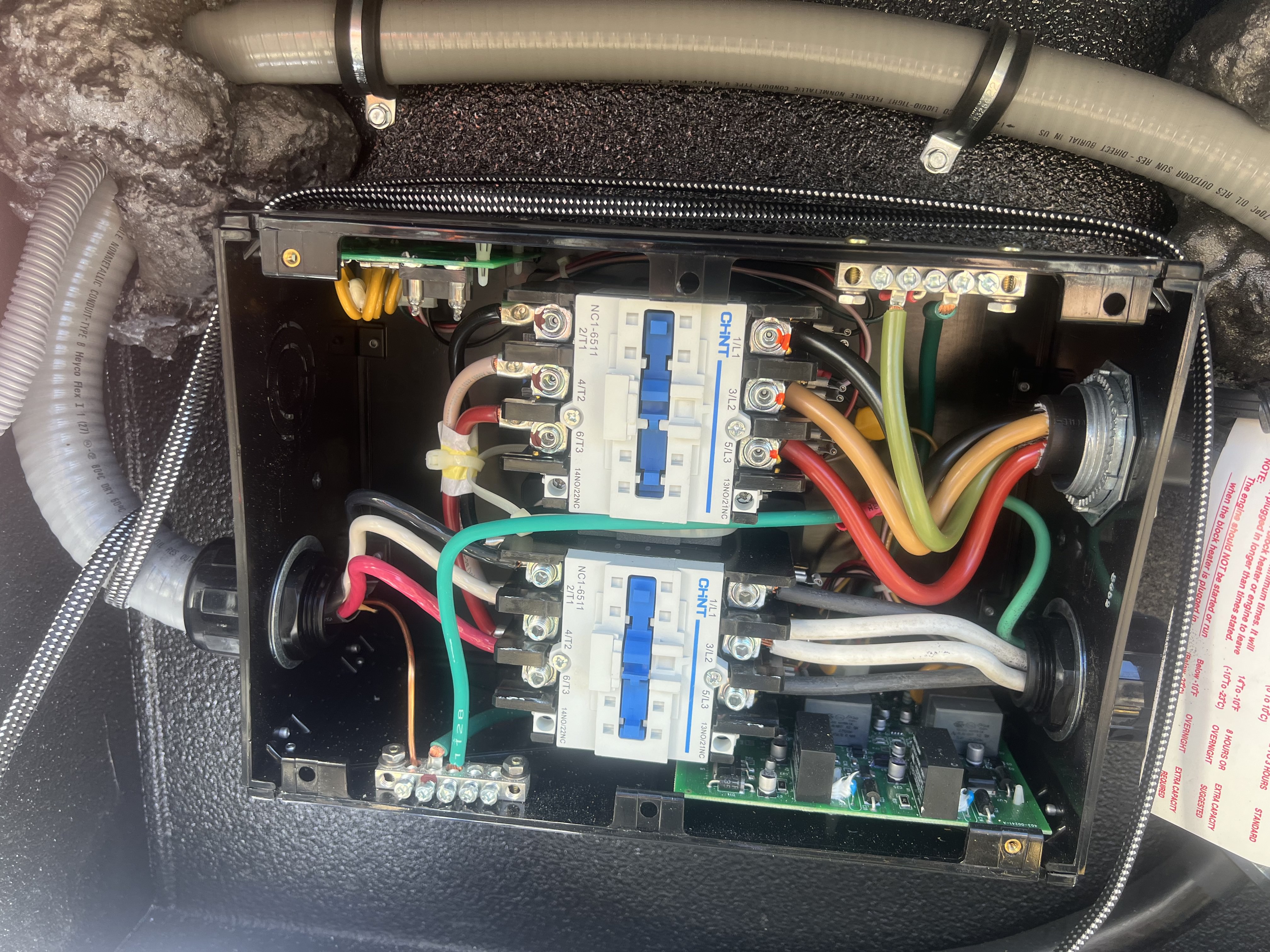
Transfer switch assembly documented in its installed position during a service visit. Reviewing the assembly in-situ shows the full routing context — wiring conduit, foam insulation, and adjacent components — alongside the contactors and control board.
The enclosure was opened with the unit installed to assess the wiring routing, conduit connections, and component condition in the actual operating environment before any repair work began.
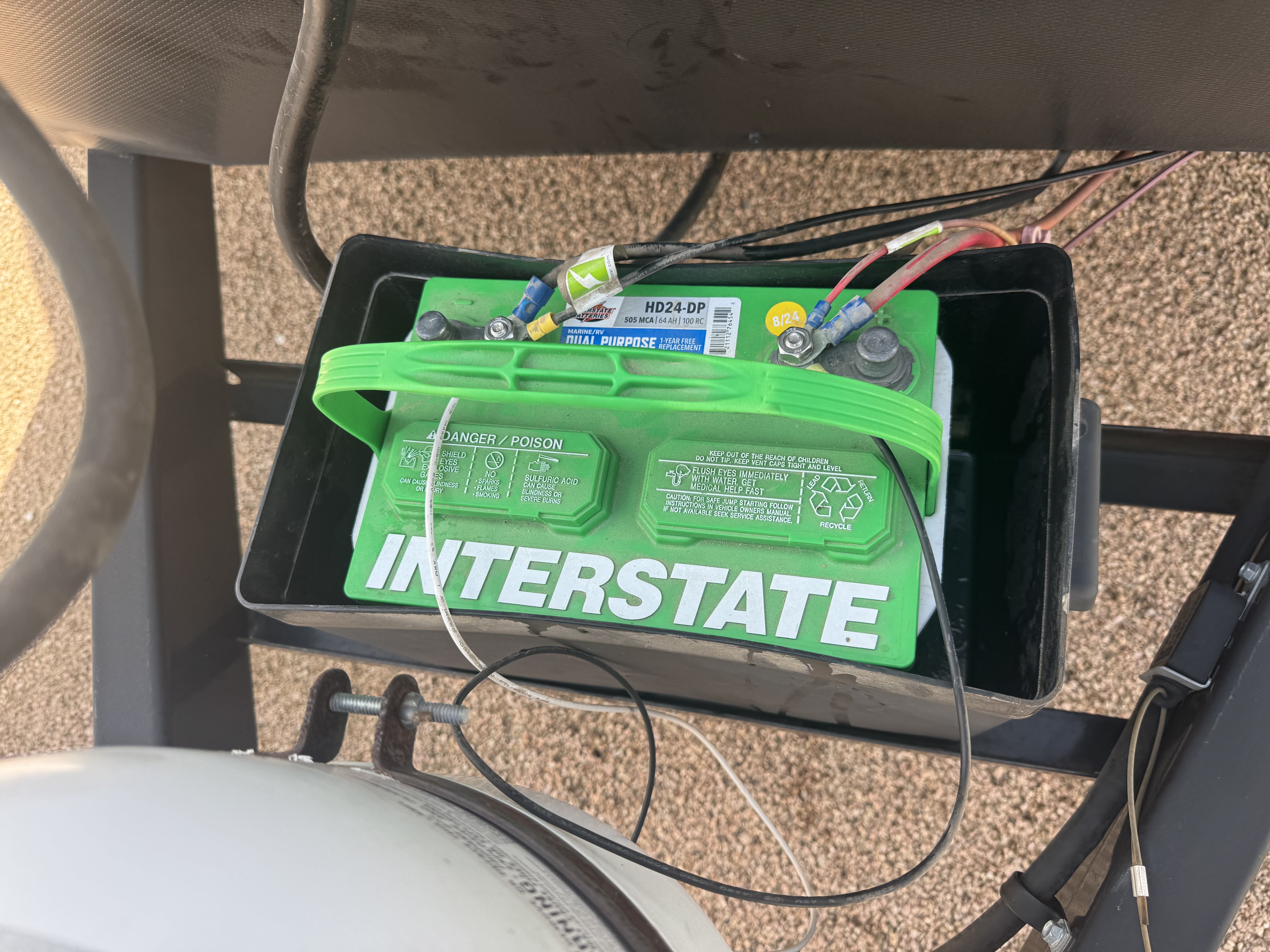
New Interstate HD24-DP 12V battery installed in the RV battery tray during a battery replacement service. Post connections and terminal condition are documented after installation.
The old battery was removed and the tray was inspected before the replacement was seated. Both posts received new ring terminal connections and torque was verified before the battery cover was reinstalled.
Related Services
Brands We Service
Service Areas
Frequently Asked Questions
What Our Customers Say
“Three wonderful gentlemen, the boss/owner included, came to my house to help me with an electrical issue in my van. They were knowledgeable, wonderful, charged me way less than expected.”
Ready to get your RV back in service?
Schedule mobile RV repair across Central Texas, or call and talk to a tech now.