RV Insurance Claim Assistance in Central Texas
If your RV has been damaged by hail, storms, water intrusion, collisions, falling debris, or other covered events, Boss Bull Mobile RV Services can help document repair-related findings and complete the repairs needed to restore your RV's house systems and exterior components.
Every repair, no questions asked.
Better Business Bureau accredited.
$500–$25,000. 0–35.9% APR based on creditworthiness.
Austin and Central Texas.
Overview
Insurance-related RV repairs often involve more than the damage that is immediately visible. Hail that damages an AC shroud or skylight dome may also have reached the roof membrane. A roof leak that stained the ceiling may have traveled through wall cavities and reached the slide floor or cabinet substrate. Water intrusion damage that looks contained on the surface is frequently more extensive once a technician reviews the affected area.
Boss Bull provides mobile RV service across Central Texas for owners navigating an insurance claim. We come to your location — whether your RV is parked at a storage facility, campground, RV park, or your residence — to document findings, photograph damage, and complete the repairs needed to restore the affected systems.
We document what we find before repair begins. That documentation — photographs, repair findings, and written scope — supports the owner's claim submission. Insurance coverage decisions are made by the insurance carrier. Boss Bull provides repair-related documentation and repair services.
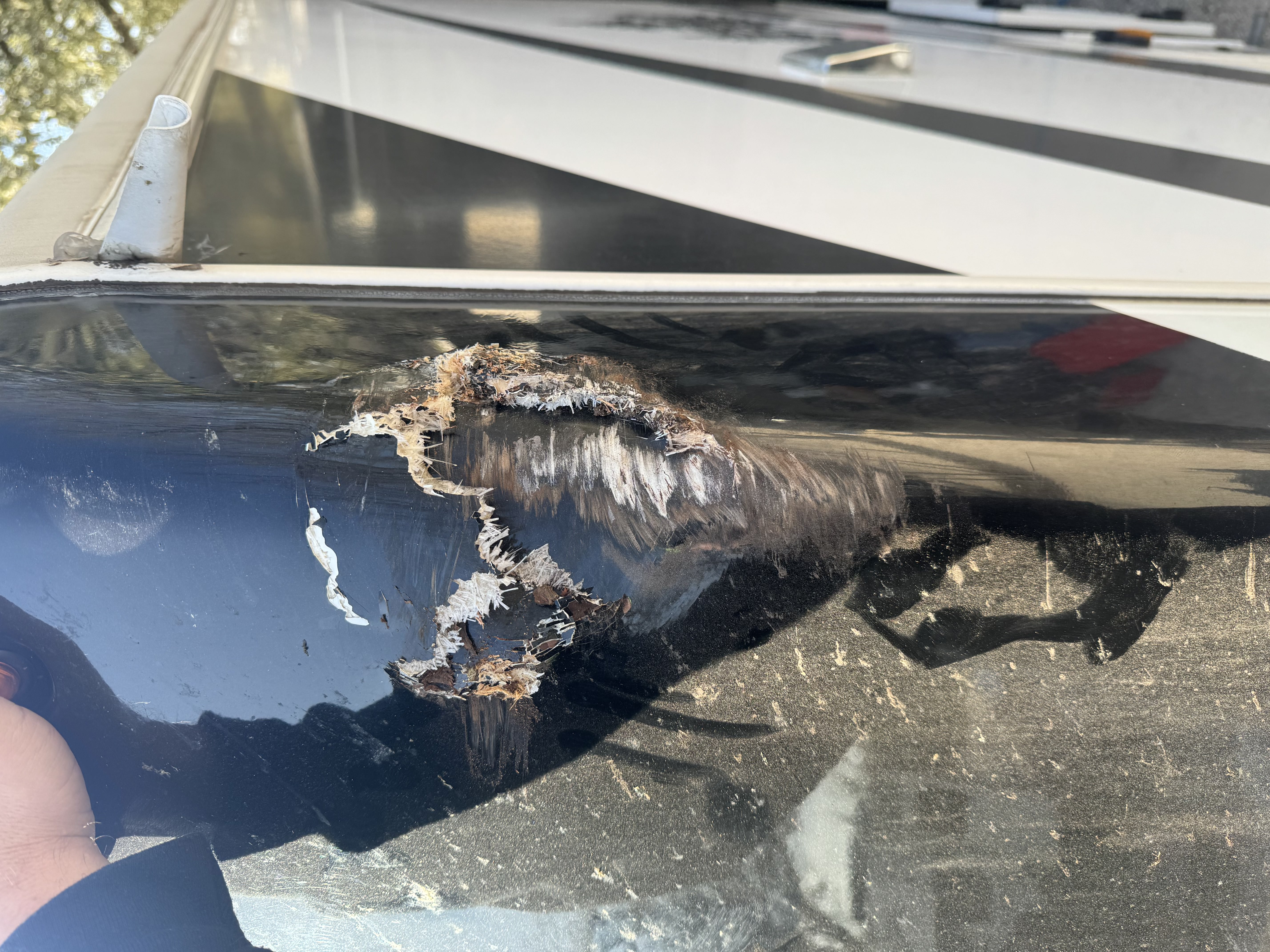
Fiberglass front cap damage documented up close before any repair or temporary cover is applied. The exposed substrate and core material inside the damage crater establish the structural scope of the claim.
The close-up was taken before any repair began to document the material condition inside the damage area. Exposed core and depth of the impact zone are captured at this stage to support an accurate claim line item.
Common Types of Insurance-Related RV Repairs
Hail, storms, water intrusion, and collisions each produce characteristic damage patterns. The following are the repair categories Boss Bull most commonly addresses in connection with insurance claims.
Roof Damage
Roof membrane, penetration seals, and rooftop components are the most frequent insurance-related repair category. Hail damage to the membrane field, AC shrouds, skylight domes, and vent covers — along with storm-driven water intrusion through failed seams — all fall into this category.
- Hail impact to the roof membrane field
- AC shroud and housing damage
- Skylight dome cracking or shattering
- Vent cover and antenna damage
- Roof penetration and sealant failures following impact events
Water Intrusion Damage
Water intrusion following a roof failure, storm event, or collision can affect ceiling panels, wall cavities, slide floors, and cabinet substrates. Damage typically extends beyond the visible stain or drip location.
- Ceiling panel damage and staining
- Interior wall panel damage from water travel
- Slide floor substrate deterioration from long-term moisture exposure
- Cabinet and substrate damage from water intrusion
Storm Damage
Storm events can damage exterior components that are not part of the roof membrane itself. Wind, debris impact, and falling objects affect rooftop accessories and structural exterior components.
- Rooftop component damage from wind or debris
- Vent cover and exhaust cap damage
- AC shroud and assembly damage
- Satellite dome and antenna damage
- Awning arm and fabric damage from wind events
Collision & Impact Damage
Low-clearance impact events, backing incidents, and road debris strikes produce fiberglass, sidewall, and exterior component damage. Documentation of the affected area before any repair begins is critical for an accurate claim scope.
- Fiberglass front cap damage
- Sidewall impact and denting
- Window damage from debris or impact
- Exterior component damage from road hazards
- Marker light and trim damage from collision contact
Common Problems We Fix
- Hail damage to roof membrane, AC shrouds, skylights, or vent covers
- Storm or wind damage to exterior components
- Active water intrusion following a storm or impact event
- Ceiling or wall staining from roof leak
- Slide floor soft or spongy following water intrusion
- Fiberglass or sidewall damage from collision or debris impact
- Window damage from debris or impact
- Temporary patches in place over active damage areas
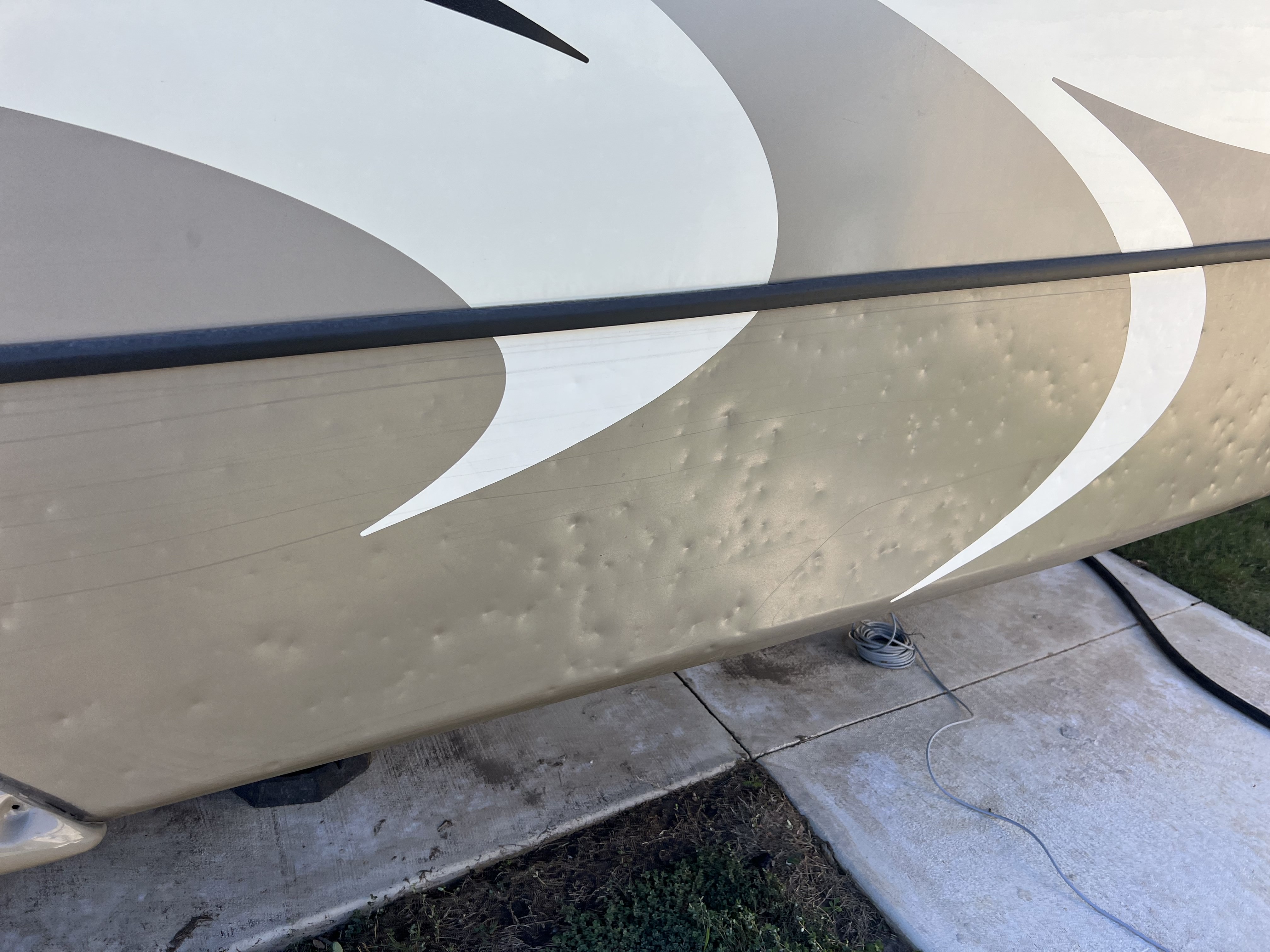
Exterior sidewall hail damage documented during an insurance claim support visit. Individual impact marks across the panel are photographed before any claim submission.
The sidewall panel showed consistent circular dimpling across the full surface below the J-rail. This pattern is characteristic of hail impact and was documented thoroughly before the owner submitted the claim.
Common Findings During RV Insurance Claim Repair Service Calls
Insurance-related RV damage is rarely limited to what is visible from the ground or from inside the coach. During service visits connected to claims, we frequently document the following conditions.
- Water damage extending beyond the original visible area — moisture found in wall cavities, ceiling channels, and floor substrate well past the visible stain boundary
- Roof leaks that traveled through internal channels and exited at an interior location several feet from the actual entry point
- Slide floor substrate deterioration caused by sustained moisture exposure that preceded the claim event — OSB softening that had been building before the damage that triggered the claim
- Exterior damage affecting multiple adjacent systems — fiberglass impact that also compromised the surrounding window seal or trim attachment
- Previous temporary patch materials applied over active damage areas — duct tape, foam, and household sealant that altered the appearance of the damage before documentation
- Hail impact found on rooftop components beyond the item that first prompted the claim — AC shrouds, vent covers, satellite domes, and skylight frames all in the same hail event
- Membrane damage at the roof field that was not visible from the roof surface without removal of the temporary cover that had been placed over the affected area
Technician Observations
What Owners Commonly Report
Presenting complaints we hear most often on these service calls.
- Hail hit the RV and I need documentation before I file the claim
- Water is coming in after the storm and I am not sure where it is entering
- My ceiling is stained and I do not know how far the damage has spread
- I had a collision and there is fiberglass damage I need documented
- My slide floor feels soft in the area where we have had roof leak issues
What We Frequently Find
Actual conditions we document when we arrive on site.
- Water damage extending significantly beyond the original visible area — a ceiling stain the size of a dinner plate often indicates water that has traveled through several feet of wall cavity or ceiling channel
- Roof leaks that entered at one penetration and traveled along roof deck channels, exiting at an interior point that appears unrelated to the entry location
- Slide floor substrate deterioration caused by long-term moisture exposure that was not visible until the floor covering was removed — damage that had been ongoing before the claim event
- Exterior impact damage that affected multiple adjacent systems — a front cap collision that also compromised the window frame seal or a sidewall strike that reached the underlying framing
- Previous temporary repairs that masked the full scope of existing damage — duct tape, household caulk, and foam applied over active damage areas before the documentation visit
Service Recommendations
What we typically advise based on our findings.
- Document all visible damage thoroughly before any temporary cover or repair is applied — pre-repair photographs establish the scope that the claim will need to reflect
- Do not remove temporary coverings placed for weather protection before the technician has photographed what is beneath them
- Note the date of the damage event, the weather conditions at the time, and any prior roof service or repair history — this context supports an accurate claim scope
- Allow the technician to assess the full affected area rather than limiting the visit to the immediately visible damage — adjacent systems are frequently affected
- Keep any damaged components that have been removed — AC shrouds, vent covers, and trim pieces — for inspection before disposal
Insurance Documentation Assistance
Boss Bull provides repair-related documentation to support RV owners through the insurance claim process. Documentation typically includes photographs taken before any repair begins, photographs of affected components and internal conditions found during the service visit, written repair findings describing what was documented, and a scope of repairs identifying the work needed to restore the affected systems.
Documentation is produced at each stage of the repair process — pre-repair condition, component condition as found, work in progress where appropriate, and completed repair. Paired before-and-after documentation from consistent vantage points supports an accurate claim submission and supports final settlement documentation when repairs are complete.
We work alongside the owner's claim process. We do not contact insurance carriers on the owner's behalf or advocate for coverage positions.
Why RV Owners Choose Mobile RV Service
- Documentation and damage assessment completed where the RV is located — before-and-after photography is most useful when nothing has been moved or covered
- Service at RV parks, campgrounds, storage facilities, and residences across Central Texas
- Emergency weather protection available for active damage situations
- Technician findings and repair documentation provided to support the owner's claim submission
- Service across Central Texas including Austin, Georgetown, Round Rock, Cedar Park, Kyle, Buda, and surrounding areas
- Financing available through Wisetack for repair work not covered by the insurance settlement
Systems We Commonly Repair in Connection With Insurance Claims
- Roof systems: membrane, sealant, penetrations, and rooftop components
- Fiberglass exterior: front cap, rear cap, and sidewall damage
- Slide-out systems: slide room structure and slide floor substrate
- Water-damaged interior systems: ceiling panels, wall panels, and cabinet substrate
- Electrical systems affected by water intrusion
- Plumbing systems affected by freeze or storm events
- Windows: impact and debris damage
- Awning systems: wind and storm damage
Before & After
Before Repair
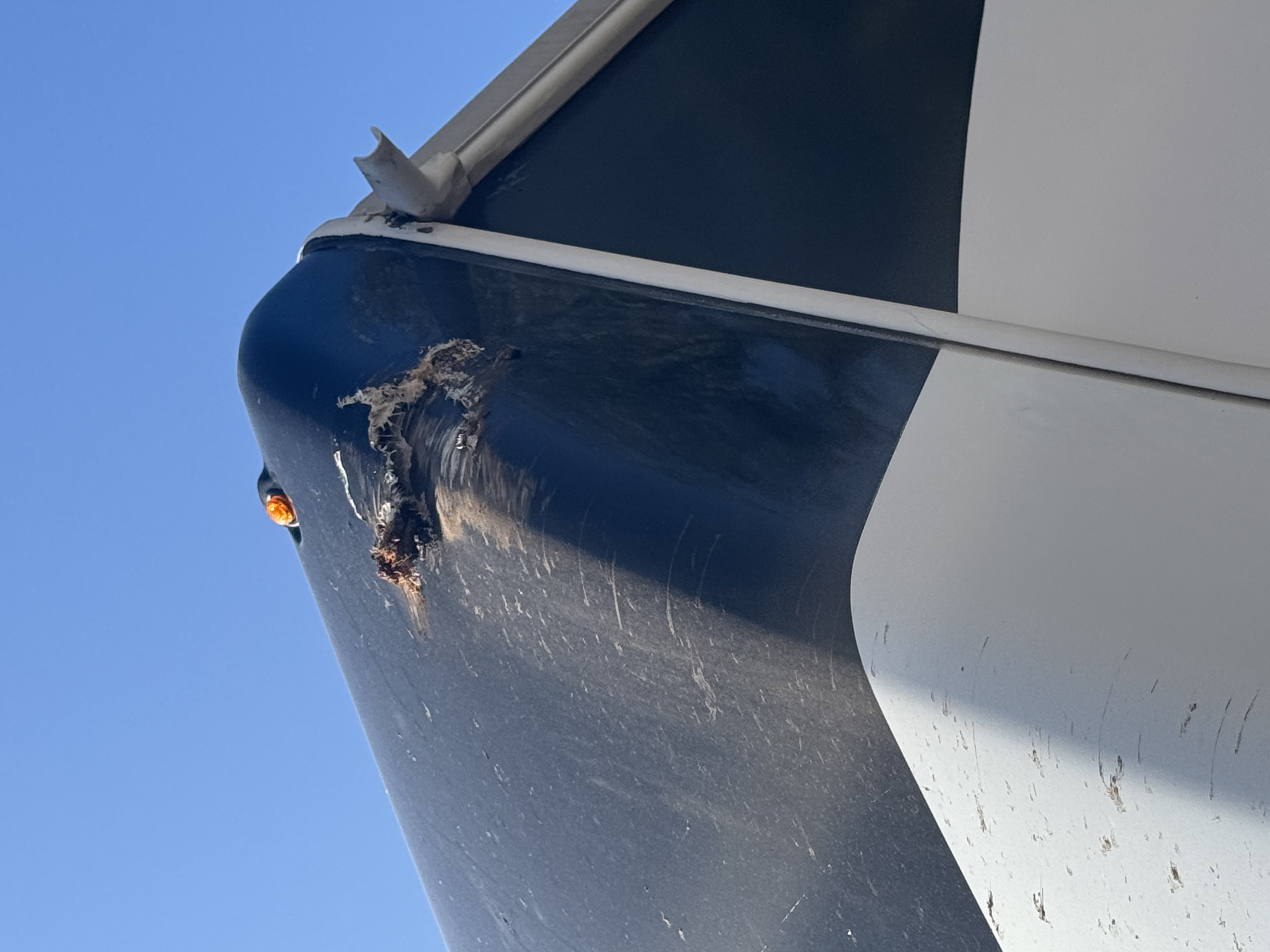
Fiberglass front cap corner impact damage documented before repair for insurance claim support. The full extent of the damage is photographed in the as-found condition before any repair or cover is applied.
Documenting the as-found condition of impact damage before any repair begins is a standard part of insurance claim support. The full damage area — including edge cracking that is not visible from straight on — is captured at this stage.
Completed Repair
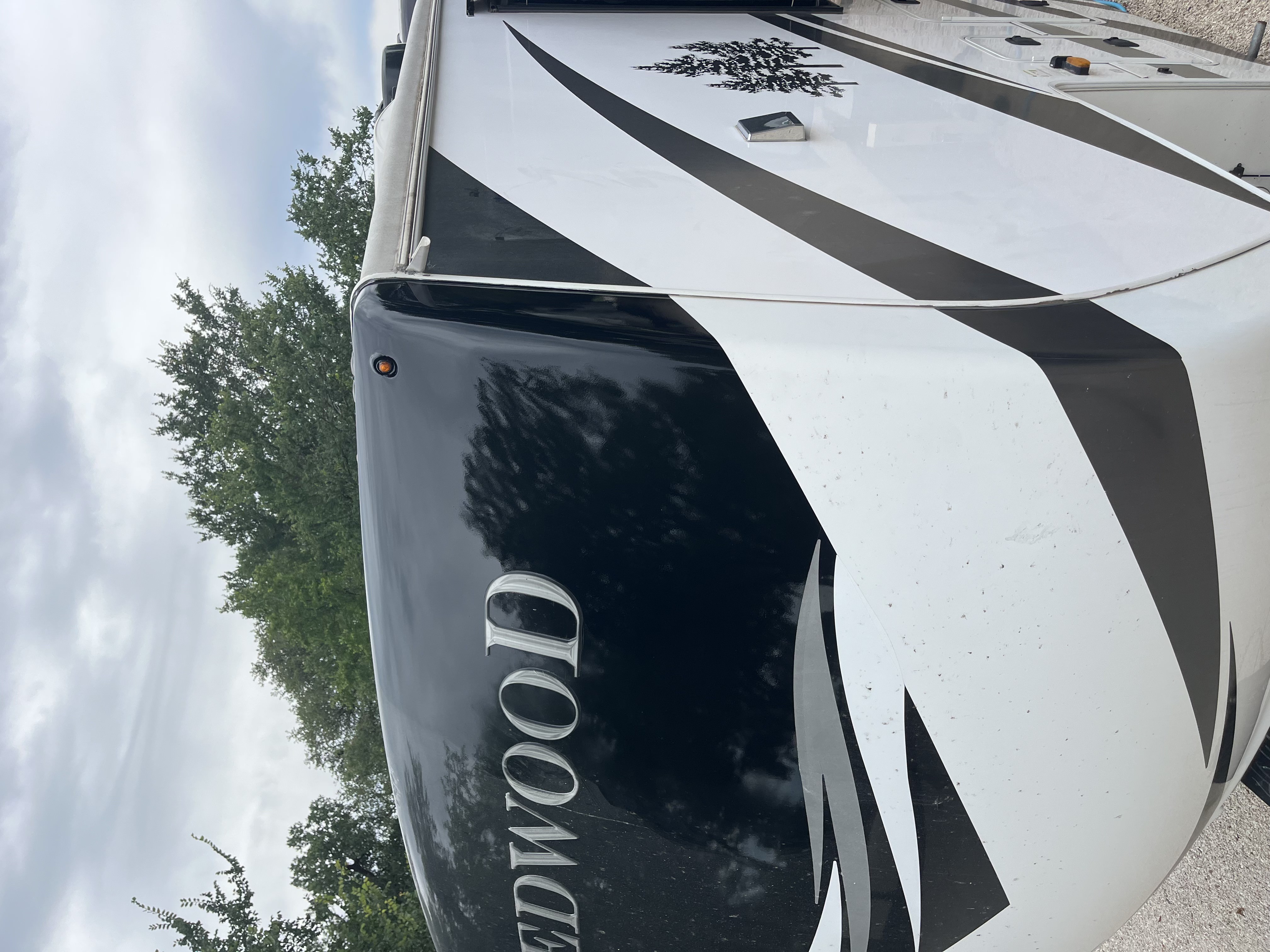
Fiberglass front cap corner repair completed. Structural damage repaired and the surface refinished to match — the completed repair is documented from the same angle used for the before photography.
The finished corner was photographed from the same position as the damage documentation to provide a consistent before-and-after record for the insurance claim. The refinished surface matches the surrounding cap color and profile.
More From This Service
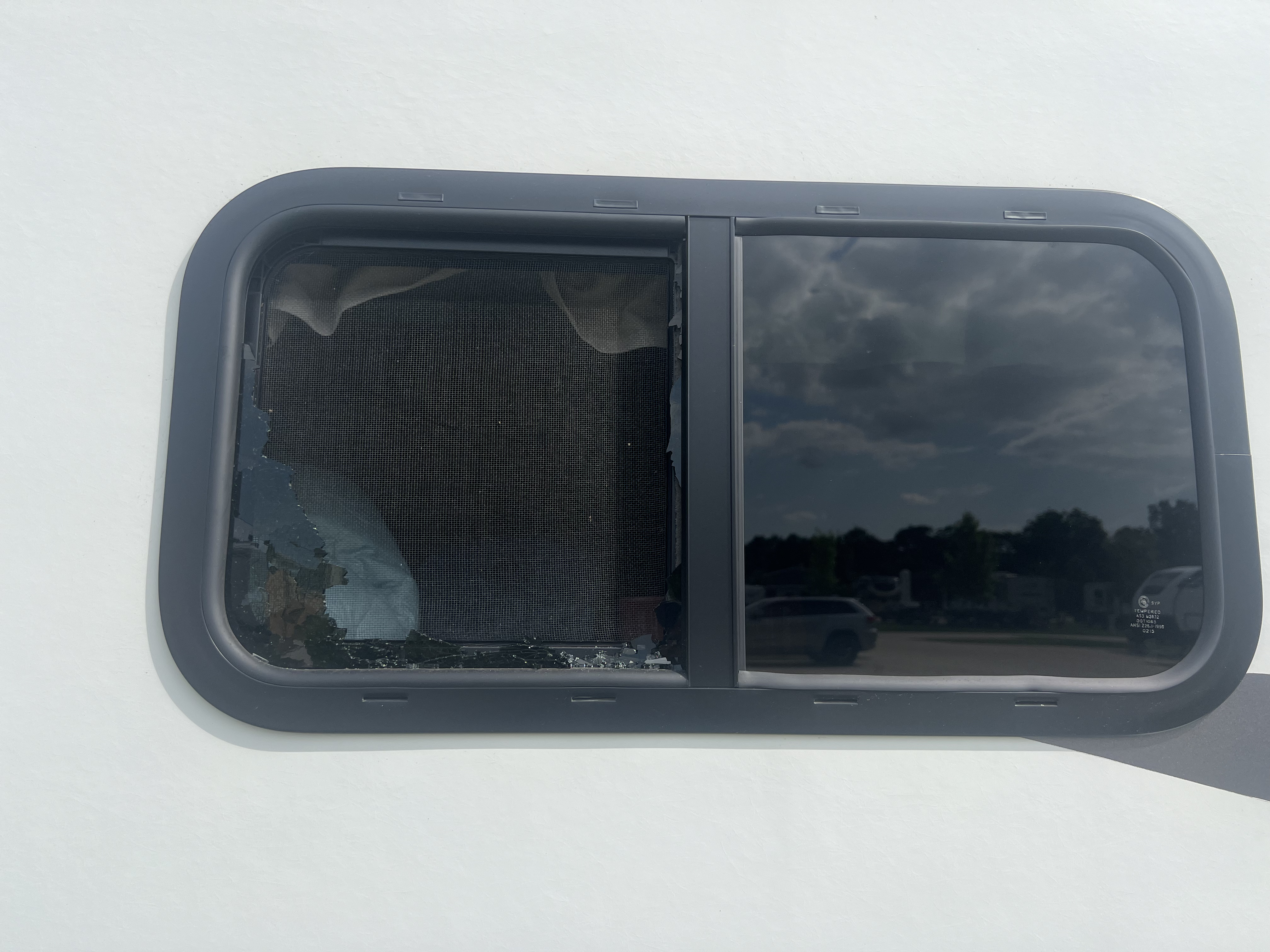
Full pane failure documented on a dual-pane RV slider window during an insurance claim support visit. The shattered pane, exposed interior, and intact adjacent pane are all captured before any cover or repair is applied.
The window was photographed in the as-found condition before any temporary cover was placed. The left pane failure is clearly isolated from the intact right pane, which supports accurate scope documentation for the claim.
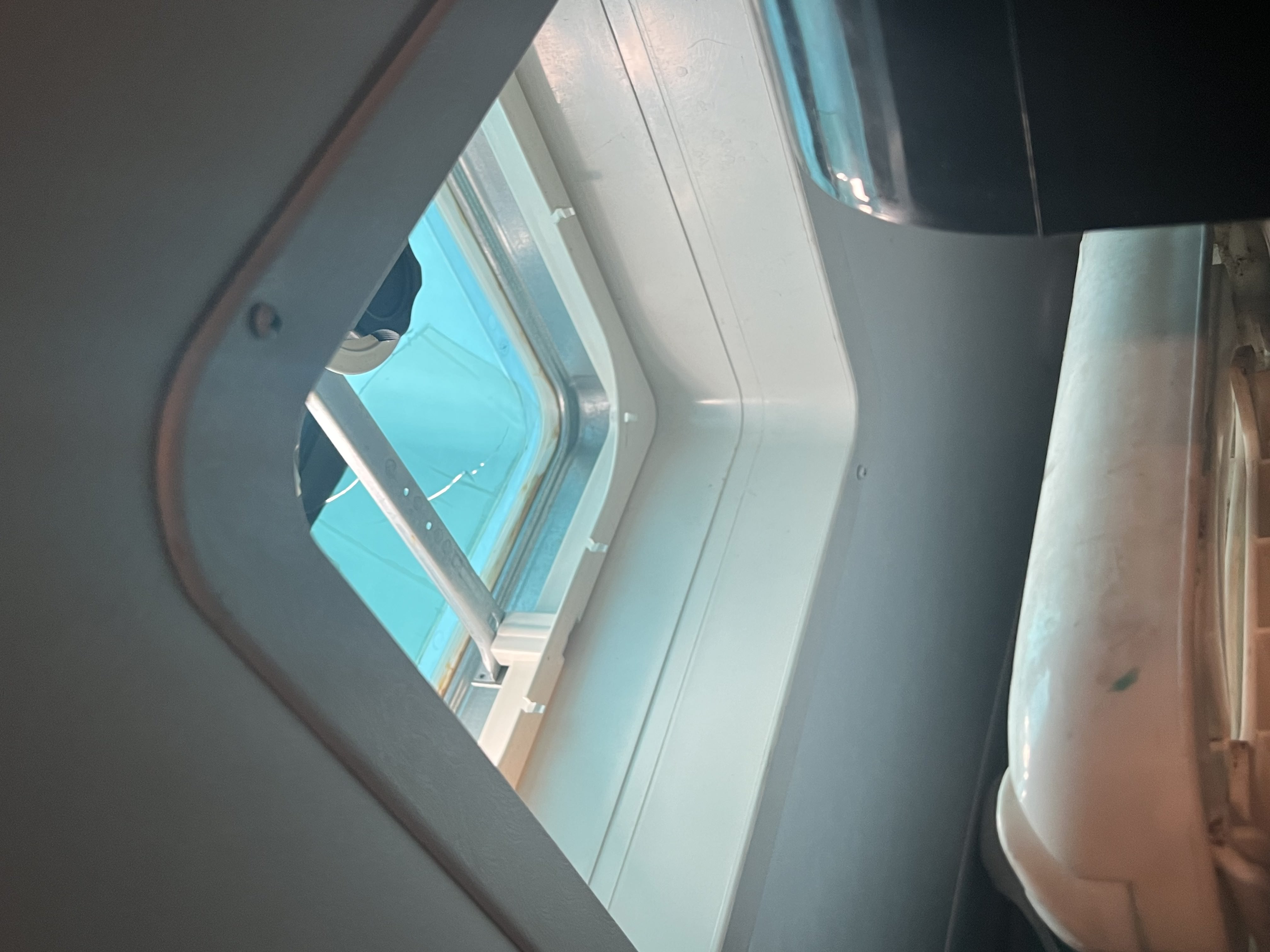
Hail-damaged skylight dome documented from inside the RV. Cracked acrylic creates an active water entry point and represents a separate line item in an insurance claim.
The skylight dome was cracked through from hail impact. The damage was documented before any temporary cover was applied so the full scope of the claim could be supported.
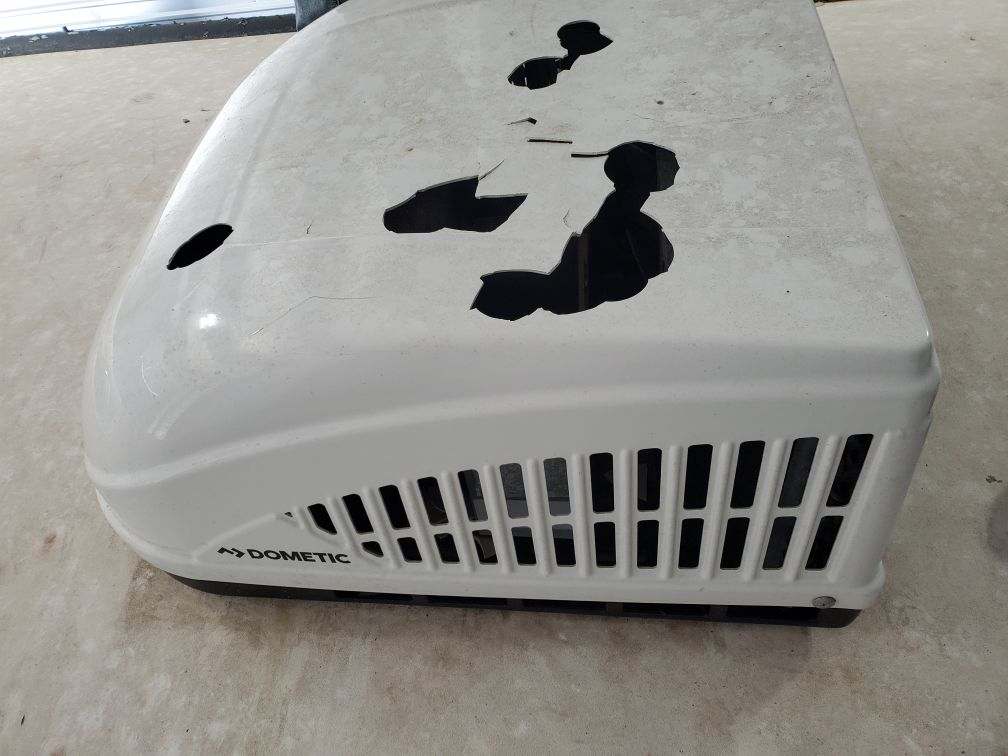
Dometic AC shroud condition after hail impact. Multiple large-caliber holes are punched through the top panel with jagged edges. Shroud damage of this severity is a direct line item in an insurance hail claim and requires full shroud replacement before the unit can be returned to service.
The shroud was removed and brought down from the roof so the full extent of the impact damage could be documented. Multiple breach points are clearly visible. The Dometic unit beneath the shroud was also inspected for fin and coil damage before the insurance documentation package was compiled.
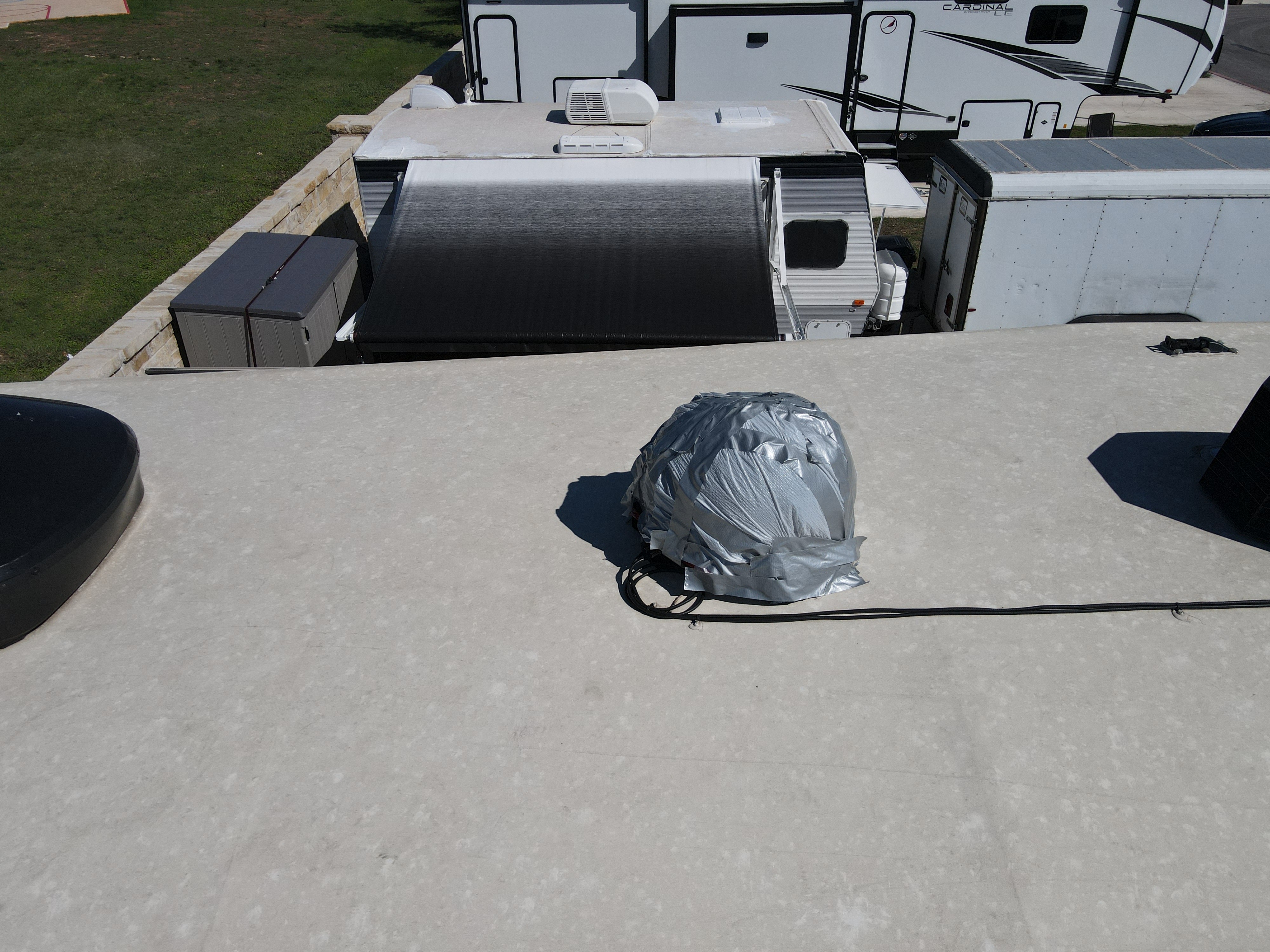
Satellite dome covered in duct tape to protect against further weather intrusion after hail impact. The dome and mount are documented in this condition before the tape is removed and the underlying damage assessed for claim purposes.
The duct-tape encapsulation was the owner's emergency response to hail impact. The dome and surrounding roof membrane were documented before tape removal so the pre-repair condition — including any impact craters visible on the membrane field — could be captured for the insurance claim.
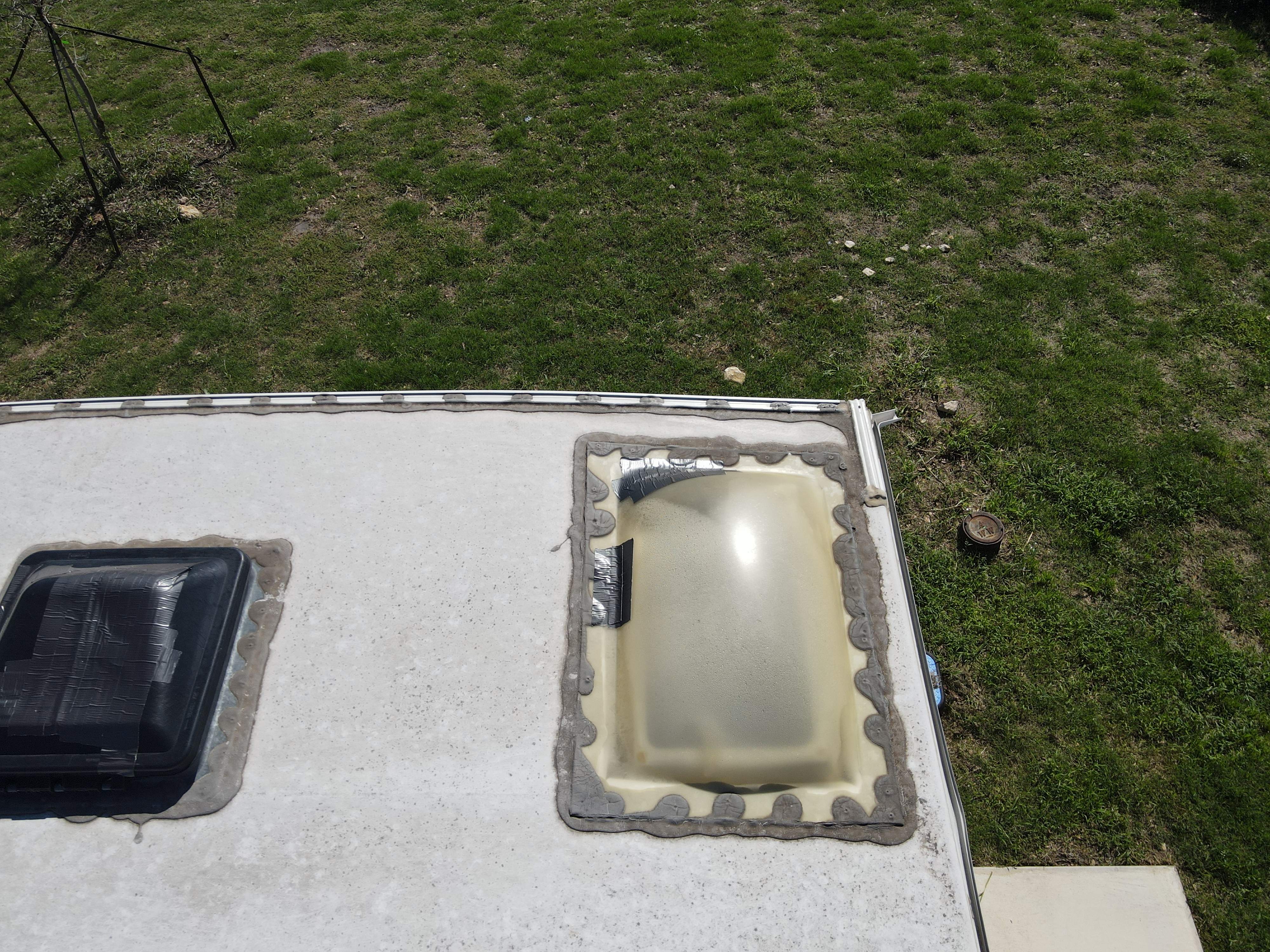
Skylight dome and adjacent vent cover documented before repair. The yellowed, UV-degraded dome with duct tape patching and a blob sealant bead are evidence of prior DIY repair attempts on a unit that has sustained both hail and weather-related damage.
The skylight frame and dome were photographed before any repair began. The combination of UV crazing, duct tape patching, and irregular sealant application helps establish the pre-existing condition versus claim-covered damage during the insurance documentation process.
Related Services
Service Areas
Frequently Asked Questions
What Our Customers Say
“Rich provided my hail damage repair parts/service estimate thru my insurance company. He has a great reputation thru Foremost Insurance and they trust his word/estimates.”
“Boss Bull replaced our roof coating and awning fabrics after the big hail storm last spring. They were very helpful with the insurance claim and did the repair quickly and professionally.”
“They hurried out and worked with the warranty company and replaced my unit quickly. The second unit failed a couple of days ago. I called them, they came out and same service as first experience.”
Ready to get your RV back in service?
Schedule mobile RV repair across Central Texas, or call and talk to a tech now.